
Paul in the woods
-
Posts
1,652 -
Joined
-
Last visited
Content Type
Profiles
Forums
Classifieds
Tip Site Directory
Blogs
Articles
News
Arborist Reviews
Arbtalk Knot Guide
Gallery
Store
Freelancers directory
Everything posted by Paul in the woods
-
You'd need to provide more detail. There are plenty of exemptions, such as felling in a garden or "open public space". I also think power companies are exempt and councils are a law unto themselves.
-
Found this growing..
Paul in the woods replied to Mark lanark's topic in Tree Identification pictures
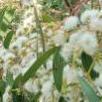
Yes, it looks most like a raspberry to me. Is there various single stems sticking up from the ground? Should be flowering about now and the raspberries will be ripe the day after the blackbirds have eaten them (or Labrador). -
Stihl Battery hedge trimmer what can it cut?
Paul in the woods replied to Woodworks's topic in General chat
I'm not sure I can help much as I've only got the compact cordless one, the HSA 56. I've also not often used hedge trimmers much so can't really compare! Mine is rated to cut 23mm and I've not gone near that but it does cope quite happily with brambles (thick stems) and twiggy bits of blackthorn in our hedges. I was pleasantly surprised how well it does and how well the battery lasts. I note the HSA 86 has a cutting capacity of 26mm and a tooth spacing of 33mm so that gives you the maximum. It would be nice to hear from someone with one and I would have thought they would be quite popular. -
If you want to confirm the id the leaves should have a fairly strong smell when rubbed. Sort of pine/citrus scent.
-
Yep. I've seen nasty blisters on someone who strimmed plain old native hogweed on a sunny day.
-
Have you got the manual for the saw? If not a copy can be found here: https://www.stihl.co.uk/STIHL-Products/Chainsaws-and-pole-pruners/Petrol-chainsaws-for-domestic-users/22264-110/MS-170-Chainsaw.aspx The chain should not move with the brake on, when the choke is on it will rev the saw but the chain should not move. Note the warning in the instructions, once started "The engine must be switched to idle immediately – otherwise, damage to the engine housing and chain brake may occur when the chain brake is locked"
-
I live on the edge of a piece of woodland that I would regard as ancient, i.e. it's been woodland probably since the last ice age. It is a mass of bluebells in the spring, so much so I regard them as a weed. At one end there is wild garlic that I would like to encourage but the blue bells out compete it and many other things! The bluebells even spread like a weed into the fields about the woodland. With my other patch, the young woodland planted on pasture, there are old hedges and patches of scrubby woodland for plants to creep out from but things are taking time. As has been said, the ground is probably too rich for some but even the wild garlic I've introduced is taking its time to spread.
-
I have no idea as I don't keep animals. Perhaps the risk of woody material from the woodland setting would be too risky to sell the hay? I knew about collecting freshly cut wild flower hay and spreading on other pasture to seed the wild flowers and then I listened in to a bumble bee zoom talk and again they were mentioning this. (An interesting fact I learnt is some bumble bees nest in clumps of grass so worth keeping some long standing rough clumps). As an owner of a few acres of woodland planted on an old field one thing that strikes me is how long it's taken for woodland wild flowers to move in. In over 30 years the grass is still the dominant ground cover.
-
Just wondering if there's any conservation groups who might be able to advise/help. If the mowings are rich in wild flower seed there could be a demand for 'green hay' to help establish wild flowers in freshly planted woodlands.
-
I like the Site KF520 gloves, £4 from screwfix. A cut resistant work glove that's a bit thicker than most, a bit of padding helps without being too bulky to hold a saw. If found they last a decent amount of time compared to cheaper gloves. https://www.screwfix.com/p/site-kf520-gloves-grey-black-large/140fr
-
ID help please - cherry of some sort?
Paul in the woods replied to ArthurJob's topic in Tree Identification pictures
Our pears are grafted on to quince, cherries tend to be grafted on to a cherry root stock I believe. We had a horrible double pink cherry tree that I removed, the rootstock has suckered all over the garden (a much larger spread than the original tree) and they produce a much more pleasant single white flower. One day I may even try grafting onto some of them. -
Crystal balls, another one of TVI's many talents. That also explains the pose in his avatar.
-
Replacing gorse with something else
Paul in the woods replied to spandit's topic in Forestry and Woodland management
No problems with the gorse on my property. As usual the odd branch has been snapped out and the most exposed have been scorched but there's many that are a lush green. Gorse does seem to be hated by 'conservationists' so it's often sprayed, burnt and mulched. -
The woodsure scheme, do we need it?
Paul in the woods replied to william petts's topic in Firewood forum
Actually I'm speaking rubbish. A bit of a search shows up simple electrical devices that can be used that provide a known electrical resistance. Such as: https://www.test-meter.co.uk/protimeter-moisture-meter-calibration-checker I found the Delmhorst MCS-1 that says it can be used on any meter with a wood scale, so might be useful? Of course, I'd like to know the basis it is referring to but worth looking in to if you need something? Found on this page: https://www.delmhorst.com/parts/accessories -
The woodsure scheme, do we need it?
Paul in the woods replied to william petts's topic in Firewood forum
Simple answer is you cannot calibrate a cheap, simple moisture meter. (Well, I'm not aware of anything other than performing your own oven dry test). I think now the new law's in force Woodsure should be much clearer in it's statements. They may mean ensure you select the correct timber type and temp if your meter allows but I wouldn't call that calibration. Woodsure should also be much clearer about the basis you're measuring on as well, they've had plenty of time. -
Help! Identification of my stove
Paul in the woods replied to Haydee's topic in Log burning stoves and fireplaces
It looks very close. Have you found the spare parts for them? https://www.hunterstoves.co.uk/parkray-spares They show parts and dimensions for their stoves so you should be able to check the model and see if anything is missing. -
Good luck, looks like you'll get to see it when it's wet and windy. They may think someone expects a bit of land, or it could just be too small for them to use. With my two small fields one the road is too small for even a small modern trator to get in. The other does have reasonable access but the farmers now don't wish to bother fields under 5 acres.
-
You may have a problem with garlic as it's planted in late autumn and will be exposed over winter. Do you know what the land is currently used for? I would think it would greatly depend on what neighbouring properties are used for as well. Any chance of having a chat to the owner to see what they want?
-
Have a look at blandford fly bites and symptoms. Not seen them myself but what you describe matches up with others have said.
-
I don't know if you've kept bees before but a couple of hives would be more a labour or love than a money making exercise. Set-up costs for a couple of hives, bees, frames, suit etc would easily be £1000+ and there's no guarantee you're get much honey. I would site hives in a sheltered spot near the house, you'll want to keep an eye on them and they'll be easier to get to. The bees will most likely fly off and forage elsewhere anywhere. No reason not to set aside an area for bees and wildlife of course. We're in a similar position, we have a couple of acres of pasture but even the local farmers can't be bothered to cut it for hay/silage (for free) as the fields are too small. It's now managed purely for wildlife. We do have bees but they mainly forage in the woodland and surrounding hedgerows. They do forage the fields for dandelions, knapweed, plantain and a few other things. Edit to add, bees may be useful for planning as you can need a large amount of equipment and an area to process the honey. Good reasons to build/convert something.
-
It's not easy, I think it's three but hard to be sure. Sabiniana has three and sylvestris two, tabuliformis twos or threes. I don't thin Sabiniana is often sold in the UK so it's probably something else. Looks like a garden setting though so who knows.
-
As a private user I'd love that. Shame transport is so expensive, that and the fact you'll not get a suitable lorry down my lane. But it does lead me to another question. Does anyone supply logs for outdoor firepits, chimineas etc? I would have said alder would be ideal for them.
-
If that's you in the last photo you're a freak with two left hands! At first glance it looks like a spindly Scots, but a bit of a search suggests Pinus sabiniana ghost/gray pine? Although that's a wild guess.
-
Anyone good with Dogwoods? What's this one?
Paul in the woods replied to Sam's topic in Tree Identification pictures
What about Cornus kousa? I also wonder if those flowers will fade to white or even if they've been damaged in any way by the late frosts? Cornus kousa 'Venus' WWW.GARDENERSWORLD.COM Plant profile of Cornus kousa 'Venus' on gardenersworld.com -
The bark looks too rough for a cherry, it looks more like a crab apple to me. Possibly something like Malus x moerlandsii "Profusion"?