


Chris at eden
-
Posts
1,446 -
Joined
-
Last visited
-
Days Won
2
Content Type
Profiles
Forums
Classifieds
Tip Site Directory
Blogs
Articles
News
Arborist Reviews
Arbtalk Knot Guide
Gallery
Store
Freelancers directory
Everything posted by Chris at eden
-
Just googled it. Looks nice. Can see why its CA, loads of old buildings. Fair play mate.
-
I see what you are saying and agree with building a good relationship with the tree officer. But, there is nothing wrong with challenging them if you think they are wrong. For the recorded, there is no such thing as a CA application, its a notice. It can't be refused or conditioned. That said, I've seen loads of CA letters with conditions. Not enforceable though. 80% in a CA must be nice. Where you based?
-
No mate. Dead trees and dead branches are fine. Its the dying exemption that's been removed and the dangerous one that has been re-worded in the 2012 regs. This obviously only applies for the last two years.
-
As Gary said you have to submit a notice in writing giving at least 5 days before felling. If the risk is so great you should fell and gather enough info to prove the exemption to the tree officer. There is no dangerous exemption for TPO's or CA's anymore. The exceptions are now, dead tree, dead branches within trees, and trees which pose an immediate risk of harm. There are others. A full list of exceptions can be viewed in the 2012 regs for TPO' and CA's, they are covered by Reg 14 and Reg 15 respectively. Also, you have a duty under section 213 of the T & C Planning Act to replace dead trees in a CA. A similar duty applies to TPO's under section 206. Hope this helps.
-
How to strengthen root system of existing tree
Chris at eden replied to Anncao's topic in General chat
If you reduce the overall height of the tree by 10%, you will reduce bio-mechanical loading at the base by 20%. If you reduce by 20% it will reduce loading at the base by 50%. This was from a book on pruning that came out recently, I forget the title. If the tree is protected remember not to spec the works for reduction as a percentage, you will need to convert the quantities to linier metres or the council may not validate. If you stake low down the stem will move allowing for the production of stem taper. What it wont do is allow root plate movement so the roots wont become optimised in my opinion. I agree with Jules, if you stake a tree with an already weak root system you may make the issue worse. This is on the understanding that the trees are established and not newly planted. -
Great post mate. Very informative.
-
I did what you are looking at 10 years ago. I did tech cert to get a job as urban forestry surveyor then worked my way up to TPO officer for a different authority 5 years later. I've just finished my L6 and I am also attending the TPO course at Malvern. My advice would be go for the L4 with Treelife. Both L4 and L6 are very relevant to TO or consultancy work. Good luck.
-
Hi James, Good to see you on the forum. I have dealt with a colleague of yours previously (Gavin Proud), very helpfully so can recommend the assistance given. Gary, I believe the minimum spec for the cellweb in your situation would be 100mm. This is good for vehicles up to 6 tonnes so fine for the average family car. There is a 75 mm version but this is for paths and cycle tracks I believe. There is also a 150mm and a 200mm for larger vehicles (30t and 60t I think). These figures can be affected by other ground factors such as CBR rating so best run your spec by James as he has offered. On development sites I usually recommend railway sleepers (new, not the ones with the tar) for the edging as it looks better than the timber edge. Your main issue will most likely be getting the finished level back down to meet the public highway without digging into the root zone unless you have a sufficient distance outside of the RPA to grade. There may also be issues with the comparative FFL's within the building and/or the level of the damp course. No dig drives are great but they are not always possible. I specified one for a development site a couple of months ago but then recommended felling a couple of weeks later on a different site as it was not practical. I did discount the engineering solutions in the report though. Horses for courses mate. Cheers,
-
woodland trees in TPO/Conservation area
Chris at eden replied to Max Power's topic in Trees and the Law
Area TPO's only cover what was present when the order was made. Woodland designations cover all the regen. Where is it listed on the first schedule? On the plan areas are shown as a dotted outline and woodlands with a continuous outline. The CA may also cover the trees but are you sure the woodland is located in a CA? This is not the norm in my experience. CA's are usually based around listed buildings. Wildlife conservation areas such as SAC's are not the same thing. Just a thought. Anyway, the CA would cover anything which has a diameter of greater than 75mm. But you can remove trees up to 100mm if it benefits other trees. E.g. forestry thinning. The forestry act also protects trees but is often forgotten. You can remove up to 5 cubic metres in a calendar quarter as long as you don't sell more than 2. Any more than this, you need a felling licence. I see this catch people out on a regular basis as it does not just apply to forests. For example, if you were taking out a load of trees on an industrial estate you would probably need a felling licence from FC. Unless there was an exemption of course. -
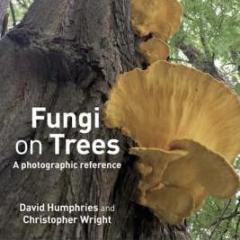
Old Polyporus maybe?
-
Yeah, top bloke.
-
I was talking to an ecologist about this a while ago and apparently for a plant to be considered naturalised it only has to have a self sustaining population. i.e. that it doesn't require re-introduction to the wild to continue to survive. His suggestion was that if it reproduces for 3 generations that's enough. It doesn't need to be here for years and years. Plants which require continual re-introduction to survive are referred to as cultivated. Sycamore and sweet chestnut are definitely naturalised unless you believe what Ted Green says that is. His view is that sycamore is native and even refers to it as Celtic Maple. Last time is saw him speak he claimed to have proof of it. Not sure how he gets around its absence within the fossil record but you never know. Interesting debate!
-
Street fighter
-
Mariokart the snes version. Battle mode on the ice. Awesome
-
They were the same as the one pete showed above.
-
I first used one in 97. I think they were called Swedish strops in those days or at least that is what the instructor called them.
-
are hedges protected in a conservation area?
Chris at eden replied to John Shutler's topic in Trees and the Law
Spot on. -
Level 6 Diploma In Arboriculture (ABC) Industry Rejection???
Chris at eden replied to hokum93's topic in Training & education
Cheers mate. -
Level 6 Diploma In Arboriculture (ABC) Industry Rejection???
Chris at eden replied to hokum93's topic in Training & education
IMO the key to achieving most things in life is determination, if you want it, you can have it, you just got to work hard. Mate, that is the smartest comment I have read in a long time and its the key to passing the L6. When I did tech cert on the old system there were bits of the syllabuses that I made no attempt to learn. I just thought if they come up in the exam I will just avoid that question. No such hiding place on the new format. There were two lads in the westonbirt group who had already done degrees in other subjects. One in ecology and another in landscape. They both commented on not only how much more work was involved in the L6 but also that the learning was more complete. I don't see that catching someone out cos they have revised the wrong stuff is education or a good way of testing it at all. If your goal is to actually teach someone a skill then formative assessment is ideal cos they won't pass until they get it right. -
Level 6 Diploma In Arboriculture (ABC) Industry Rejection???
Chris at eden replied to hokum93's topic in Training & education
Great comments Paul and i agreed 100%. If you do any qualification and then dont use the information for 10 years your retention of the info would be limited at best. Its why CPD is so important. The re-subs in this course are a bit like revision in that you go over them again and again to complete and polish your learning. Gaining these qualifications is for me about proving you can work at a set level not particularly about retaining information. In terms of education its now deemed by most experts that summative assessment on its own does not work and that formative assessment is much better for learning. I did my FE teaching qualification a couple of years ago and this was the focus of the course. The L6 is assessed purely formatively in that you submit and re-submit which forms the basis of your education. This is now best practice. I spoke with someone a few weeks ago who did the MSc in arb and apparently this is entirely course work now which is again formative. You may be able to throw some light on this Paul as i see you have done it yourself? What are your thoughts? Finally, anyone who thinks you cant fail the L6 should sign up and see how that goes for them, or possibly try telling that to the 65% of people who are still working hard to acheive or have dropped out. The work load and level of this course are a challenge and to say you can't fail is just wrong. Sorry about the rant but i know how hard i worked to gain this qualification so i'm a little miffed when people suggest its a dead cert that you pass. -
Level 6 Diploma In Arboriculture (ABC) Industry Rejection???
Chris at eden replied to hokum93's topic in Training & education
I agree. Some of the lads were into their third year in my group which treelife did at a reduced cost I think. It was the only way they could stay motivated so they kept attending and filling in the gaps from their first year. Aim for two years though, it can be done. -
Level 6 Diploma In Arboriculture (ABC) Industry Rejection???
Chris at eden replied to hokum93's topic in Training & education
Suppose you have to find what suits you really. I did it with a new born which was a real killer at times. Its all about determination and setting your self small achievable targets. -
Level 6 Diploma In Arboriculture (ABC) Industry Rejection???
Chris at eden replied to hokum93's topic in Training & education
I asked Dave the question when I dropped off my portfolio. Don't quote me on this but I think he said he had 14 going to moderation which was about 35%. Phone Keely though and ask, I'm sure she will tell you. ABC apparently also described them as an exemplar training provider. I've done loads of stuff with them, in my experience other training providers don't come close. That may be that their style just suits me though. They really encourage discussion and debate, sort of like a learning forum so its always interesting. I'm not a fan of power point and they really keep that to a minimum. You'd think i'd be glad I am finished but I kind of miss it. Bit sad that really. -
Level 6 Diploma In Arboriculture (ABC) Industry Rejection???
Chris at eden replied to hokum93's topic in Training & education
Mate, don't do it. Take a punt and re-sub, its much easier. I over researched in the first year then changed my approach in the second. Year 2 was much less stressful. -
If it has gills, Oyster maybe?